Written by a Bahraini production house that has been making zaffa songs since 2007: what the tradition is, how it is performed, and how a zaffa can be made in your own names.
A zaffa is the ceremonial procession that announces the arrival of the bride and groom at an Arabic wedding. It is not background music and it is not a dance number; it is the formal announcement that the couple has arrived and that the celebration has begun. In practice it brings together three things: a rhythm strong enough to carry over a hall full of people, sung or chanted lines that praise the couple and bless the marriage, and a slow, deliberate walk that gives the guests time to stand, look and greet. The word itself carries the sense of escorting someone in honour. Everything about it, the volume, the pace and the words, exists to move the attention of the room to one point and hold it there.
The zaffa belongs to the entrance, and the rest of the evening is timed around it. Guests are seated, the lights are brought down or turned toward the aisle, the music starts, and the couple walk in while it plays. In many Gulf weddings the bride enters alone to her own zaffa, walking the length of the hall to the kosha, the raised seat at the front, and the groom joins later in the evening with a second, shorter entrance of his own. In other traditions the couple enter together. Some families also use a zaffa earlier in the day, when the groom is escorted from his home, and again at the reception. Where it is placed is a family decision; what does not change is that it marks a threshold rather than filling time.
Zaffa practice differs across the Arab world, mainly in instrumentation and in how much of it is sung. Gulf weddings lean on percussion and voice: heavy drum patterns under a singer or chorus carrying lines of praise, often with the couple named directly. Levantine celebrations are known for a fuller processional sound, with drums and wind instruments and a troupe that moves along with the couple, and usually a great deal of clapping and call and response from the guests. Egyptian weddings favour a loud brass and percussion procession, with performers leading the way into the hall. These are general tendencies rather than rules, and Arab families abroad mix them freely. What is shared everywhere is the function: a procession, a rhythm, and words spoken over the couple as they enter.
There are two different things called a zaffa, and it helps to be clear about which one you are arranging. A live zaffa is a troupe hired to perform at the venue, drummers and a singer and sometimes dancers or sword performers, who walk the couple in physically. A produced zaffa is a recorded song, written, sung and mixed in a studio, then played through the hall sound system as the couple enter. The two are not rivals; many weddings use both, with the recording opening the entrance and the troupe taking over on the floor. What a recording gives you that a live troupe cannot is a fixed performance: the same voice, the same arrangement and the same words every time it is played, at the reception, in the wedding video, and for years afterwards. Mlath Al-Amal produces the recorded kind.
Doing a zaffa by name means the names are sung inside the song, not announced over it. This is the part most couples ask about, and it is where methods differ sharply. In our work, the passages containing the names are re-performed and re-recorded by the same singer who performs the rest of the song, so the names sit inside the melody, in his voice, with the same room tone and the same phrasing as everything around them. There is no name pasted over a finished track, no synthetic voice and no voice cloning. The difference is audible to any guest: a pasted name sounds like an insert and the seam is heard, while a sung name sounds as though the song was written for that couple, because that passage was genuinely performed for them.
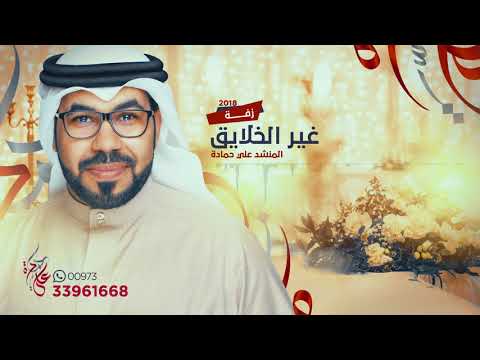
Mlath Al-Amal Art Production is a Bahraini company, commercial registration 105668-1, producing Arabic zaffa songs since 2007. Across more than nineteen years the catalogue has grown to over eighty exclusive works, with more than fifteen million views on the official channels. Four voices work with us under exclusive agency contracts, and the couple chooses between them: Yousif Alashiri, whose delivery is silken and refined; Ali Hamada, warm and emotional; Khalil Aljurdabi, known for moving lyrics and a strong presence; and the poet Khalil Al Ismail, whose exclusive poetic works run to around five minutes. Writing, composition, performance and mixing are handled in house, which is the reason the personalised passages can be properly re-sung rather than edited in. We work with families across the Gulf, the wider Arab world, and Arab communities abroad.
A full zaffa from us runs about eight minutes and can be extended on request. It can be produced with music or without it, and with percussion or without, a choice that matters to families who prefer voice and drums only, or voice alone, for religious or personal reasons. The finished song is delivered digitally, by WhatsApp or email, so distance is not a factor: the same file reaches a wedding in Manama, Riyadh, Cairo, London or Toronto. To begin, tell us the names exactly as you want them sung, which singer you prefer, and which version of the arrangement suits your evening. Messages reach us on WhatsApp at +973 3396 1668, in Arabic or English, whichever you are more comfortable with.
Message us on WhatsApp with the names and the wedding date - we will take care of the rest.
Message Us on WhatsApp